Key takeaway:
• Buying a NYC condo requires understanding loan types, down payment thresholds, and building-level approval requirements that differ from standard home purchases.
• Matching the right financing strategy to your budget and the specific building can meaningfully reduce your cost to close.
Financing a condominium in New York City involves more moving parts than a typical mortgage transaction. Loan limits, building eligibility rules, and city-specific taxes all shape what you will actually pay at the closing table.
When evaluating condominiums for sale in NYC, buyers should begin by determining whether a conforming or jumbo loan applies to their purchase price. The 2026 conforming loan limit for all five New York City boroughs is $1,209,750 for a single-unit property, as designated by the FHFA. Any loan amount above that threshold is classified as jumbo, which carries stricter qualification standards and different pricing dynamics.
Conforming vs. Jumbo Loans for NYC Condos
The distinction between conforming and jumbo financing is especially relevant in Manhattan, where purchase prices routinely exceed the conforming ceiling. The 2026 conforming loan limit for a one-unit Manhattan property is $1,209,750, and most Manhattan transactions exceed this limit and are financed through jumbo loans.
For buyers whose loan amount falls at or below the conforming ceiling, conventional financing backed by Fannie Mae or Freddie Mac is an option. Conforming loans typically offer more favorable interest rates and terms compared to non-conforming or jumbo loans.
For jumbo borrowers, qualification criteria tighten considerably. Larger loan amounts in NYC are often associated with more risk for lenders, which usually translates to stricter qualification criteria. As a borrower, you are typically required to have a higher credit score, lower debt-to-income ratio, and provide a larger down payment compared with conventional loans.
| Loan Type | 2026 NYC Limit | Typical Down Payment | Key Requirement |
| Conforming | Up to $1,209,750 | 20% for primary residence | Standard credit/DTI rules |
| Jumbo | Above $1,209,750 | 10-20%+ | Credit score 700+ preferred |
| FHA | Up to $1,249,125 ceiling | 3.5% with 580+ score | Owner-occupancy required |
Credit Score and Down Payment Benchmarks
Credit profile is one of the most consequential variables in NYC condo financing. To buy a condo in NYC, you will need a credit score of 680 to 740, enough money for a down payment and closing costs, and the right debt-to-income ratio. For jumbo loans specifically, most jumbo lenders want 700 or higher, and the best pricing usually starts at 740.
Down payment requirements vary by loan type. Lenders typically require a down payment of at least 20% for a primary residence purchase, but higher for investment property. Buyers with tighter liquidity may qualify for lower thresholds. Federal Housing Administration mortgages allow as little as 3.5% down if your credit score is 580 or higher.
Closing costs are a separate line item that buyers often underestimate. Closing costs in NYC typically run 1.5% to 6% of the purchase price, depending on property type and financing. Buyers should also account for the NYC mortgage recording tax, which applies when financing a condo purchase and can add meaningfully to the total cash needed at closing.
Down Payment Assistance and New Development Considerations
Eligible buyers may reduce upfront costs through city-administered programs. According to the NYC Department of Housing Preservation and Development, the HomeFirst program allows qualified buyers to purchase a condominium for owner-occupancy in one of the five boroughs of New York City. NYC HomeFirst delivers up to $100,000 toward the down payment or closing costs, and the loan is fully forgiven after 10 years of owner-occupancy with no monthly payments and no interest.
Buyers targeting new development condos face an additional layer of complexity. Most lenders will not let you get a mortgage on an apartment where fewer than 15% of the units are under contract. There are lenders that work through mortgage brokers and bankers who are willing to lend in new buildings before they are 50% sold, especially for jumbo loans, since jumbo loans are not backed by Fannie Mae and Freddie Mac, giving lenders flexibility to offer mortgages in buildings that do not otherwise meet conforming guidelines.
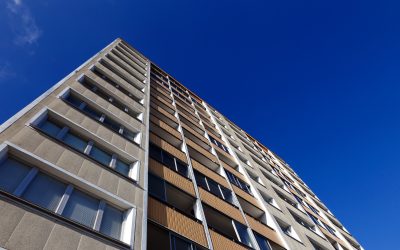
250 West 96th Street is a 23-story condominium containing 131 one- to five-bedroom residences, distinguished by its Jura gray limestone facade, loft-like windows, and staggered terraces. Designed by architect Thomas Juul-Hansen, the building celebrates the Upper West Side’s iconic architecture through a modern perspective, seamlessly integrated between Riverside Park and Central Park.
FAQ
What credit score do I need to finance a NYC condo? A buyer should have a credit score above 740 to secure the most competitive rate, but there are sound options for buyers with scores as low as 680.
Are condos easier to finance than co-ops in New York? Condos are financed more like standard mortgages and typically record a mortgage with the city, which means you may owe the NYC mortgage recording tax, raising your cash-to-close. However, condos do not carry co-op board approval hurdles on financing percentages.
What is changing in NYC condo financing requirements? Per Fannie Mae’s Lender Letter LL-2026-03, the required reserve allocation for capital expenditures and deferred maintenance is rising from a minimum of 10% to a minimum of 15% of the annual budgeted assessment income, applying to full review loan applications dated on or after January 4, 2027. Buyers should ask building management about current reserve levels before committing to a purchase.
Can I use a preferred lender for a new development condo? One option is to use the preferred lender to get qualified and obtain your commitment letter, so you know you have financing. Then as you get closer to closing, you can shop around for more competitive terms.
Choosing the right financing structure before you make an offer puts you in a stronger negotiating position and prevents delays at closing. For buyers exploring Upper West Side residences, 250 West 96th Street offers a range of one- to five-bedroom condominiums in a building designed for the way New Yorkers live today. Consulting a mortgage professional familiar with NYC condo lending guidelines is the clearest first step toward closing with confidence.